Commercial real estate sales training gives brokers a repeatable system for prospecting, qualifying opportunities, leading client conversations, managing pipelines, and winning business. The most effective programs combine structured sales processes with ongoing coaching and practice to create consistent behaviours, stronger client relationships, and more predictable revenue growth.
What Is Commercial Real Estate Sales Training?
Commercial real estate (CRE) sales training sales training helps CRE brokers and advisers develop the skills and behaviours needed to win new business, grow existing accounts and build stronger client relationships.
Unlike technical CRE training focused on areas such as valuation, leasing or financial modelling, commercial real estate sales training focuses on the commercial side of the role – from prospecting and starting conversations to developing opportunities and growing accounts.
At Cosmic Growth, we make this practical and specific to commercial real estate.
Rather than relying on generic sales theory, the focus is on giving CRE professionals repeatable approaches they can apply to real prospects, clients and opportunities.
Where Most Commercial Real Estate Sales Break Down
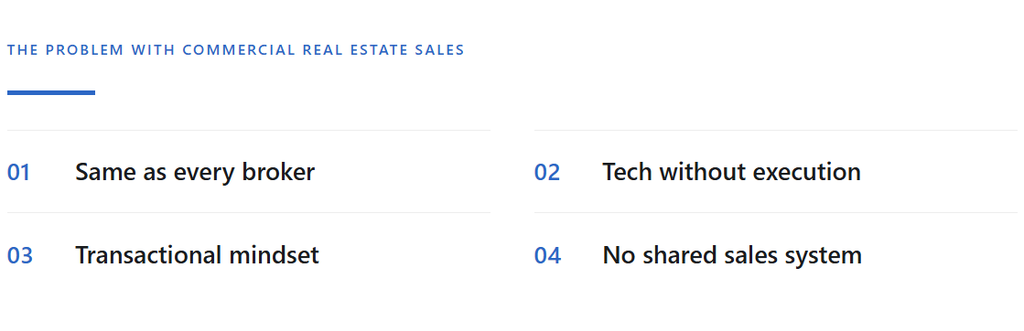
Even experienced CRE teams can struggle to turn expertise and relationships into a consistent business development engine. In our work with commercial real estate firms, we typically see four recurring problems:
- Sounding like every other broker: Most tenants and landlords already have brokerage relationships. If outreach revolves around the same expiring lease events, market updates and generic introductions, there’s little reason for a prospect to engage.
- Technology without execution: CRE firms often have plenty of sales technology, but no consistent approach to using it. Some brokers hide behind automated outreach; others barely use the tools available to them.
- A transactional mindset: Conversations stay focused on leases, renewals and square footage instead of connecting real estate decisions to wider issues such as growth, cost, risk, operations and brand.
- No shared sales system: Successful approaches often remain in individual brokers’ heads. Without shared messaging, processes and visibility, leaders struggle to identify what works, coach effectively or replicate success across teams and regions.
These are the gaps commercial real estate sales training is designed to address – modernizing business development without removing the individual relationships and personal approach that make CRE sales work.
How to Build a Commercial Real Estate Sales System
Effective CRE prospecting shouldn’t depend on occasional cold calls, generic emails or waiting for a lease event. A strong prospecting system gives brokers a repeatable way to identify the right accounts, find a relevant reason to engage and create conversations across multiple channels.
A practical process looks like this:
- Start with research and a reason to engage: This reason should be about your prospect NOT you. So rather than just leading with “when does your lease expire?”, state something about them like:
- “Given (company name)’s has just expanded to the (Houston) area, I imagine an aim of yours as you begin as Operations Director will be to keep production up with increased demand. How are you currently looking to achieve this?’’
- Talk about customer problems not your service lines: Instead of saying “we are a leading real estate service provider.” which is what everyone says and your customer doesn’t care about, talk about their problems. For example:
- ‘’As CEO, you may not have the time to fully look into current real estate trends, but I imagine you’re still keen to ensure (company name) has the best space for productivity and profit?’’
- Use multiple channels: Outbound business development training should combine the phone, email, LinkedIn, video, voice notes, direct mail and on-site visits or “stacking”.
- Different prospects respond in different places, so the channels should work together rather than operate in isolation.
- Turn the activity into a cadence: Define when and how brokers should follow up across those channels. This creates consistent execution without resorting to high-volume “spray and pray” outreach.
- This sales cadence guide gives an excellent summary of how many touches it often takes to engage a prospect and for key accounts it can reach up to 30, provided it’s done in a structured and personalised way. The result is a prospecting system that gives brokers structure while still allowing outreach to feel personal and relevant.
Cresa Atlanta, for example, grew revenue by over 20% after transforming the way they approached commercial real estate sales whilst JLL greatly increased outbound pipeline.
How to Improve Commercial Real Estate Sales Conversations
Strong CRE sales conversations move beyond immediately thinking about the sale, your targets and revenue. Instead of focusing too quickly on leases, renewals or square footage, brokers should understand the business pressures driving the real estate decision.
At Cosmic Growth, we look to four areas:
- Discovery: Tailor conversations to the stakeholder. A CFO may care about cost and risk, while an operator may be more concerned with capacity, logistics or operational efficiency. Therefore questions need to be tailored to each:
- For example for a CFO, the question could focus around, ‘’Given the (New England) industrial market remains active, with strong demand (~17M SF absorption) and steady supply. How are you currently approaching cost reduction across your lease terms, subleasing strategy, and labour footprint?
- Whilst for an HR leader, ‘’Attracting and retaining top talent often rates as the biggest challenge for HR professionals in CRE. How does your workplace contribute to attracting talent?’’
- Questioning: Use probing questions to uncover what’s changing in the business, why it matters and what happens if the issue isn’t addressed.
- For example, ‘’With (company name)’s rapid growth into (the Midlands), how is your current office set up to support the increase in staff?’’
- Value articulation: Connect your CRE expertise to outcomes the client cares about – such as growth, cost, risk, brand or operational performance – not simply the property requirement. Customer stories are often a great way to go about this with a clear pain before and a direct result afterwards:
- ‘’(company name) operated out of 3 smaller buildings creating huge inefficiencies and they wanted to consolidate into a Class A owned facility. With (CRE firm), they acquired an off-market 65K SF facility at 20% below replacement cost, and were able to sell all 3 of their previous buildings at full price.’’
- Clear next steps: Map the other stakeholders involved, agree what needs to happen next and give both sides a reason to continue the conversation if you’ve identified a clear need. A few questions to finish could include:
- ‘’How does Thursday at 2pm sound to further discuss your fulfilment centre needs as you look to increase size without adding huge extra costs?’’
- ‘’Is there anyone else at (company name) who you feel should be involved in this discussion?’’
- ‘’Great, does focusing on the facility location first make the most sense to you?’’
How to Turn Existing Commercial Real Estate Clients into Growth Opportunities
Winning a CRE client shouldn’t be the end of business development. Existing relationships can create opportunities across other locations, regions, business units, service lines and stakeholders – but only if teams proactively look for them.
A strong account-growth approach includes:
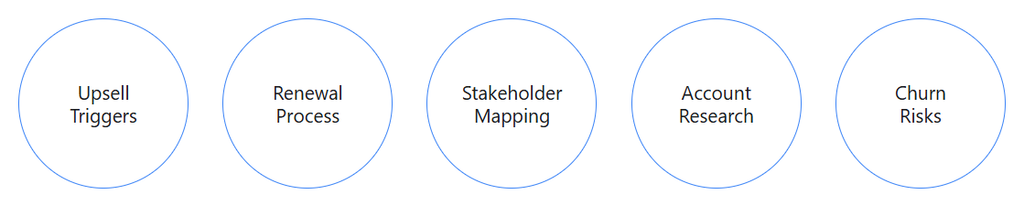
- Map the account: Understand the wider organization, key stakeholders, locations and relationships you already have.
- Research for change: Monitor expansion, leadership changes, new markets and other developments that could create a real estate need.
- Multi-thread relationships: Build relationships beyond your primary contact so your knowledge of the account isn’t dependent on one person.
- Identify cross-sell and expansion triggers: Look for relevant moments to introduce another geography, service or capability rather than forcing an upsell.
- Create an account plan: Agree which relationships and opportunities to develop, who owns them and what happens next.
This reflects how to approach account-growth training: using real accounts, stakeholder mapping, research, account reviews and coaching to help teams proactively uncover opportunities without making established client relationships feel transactional.
How Commercial Real Estate Leaders Should Coach Their Brokers
CRE sales coaching should go beyond reviewing pipeline numbers and asking brokers what they’re going to close. Managers need to coach the behaviours that create and progress opportunities.
Focus coaching around real activity and live deals. That means reviewing:
- Prospecting: Are brokers targeting the right accounts, stakeholders and triggers?
- Conversations: Are they uncovering business challenges or staying at a transactional level?
- Opportunities: Have they mapped the decision-makers, risks and next steps?
- Execution: Are agreed prospecting and sales behaviours actually happening consistently?
The manager’s role is not to take over the deal. It’s to ask better questions, identify gaps and help the broker or adviser determine what to do next.
What a Commercial Real Estate Sales Playbook Should Contain
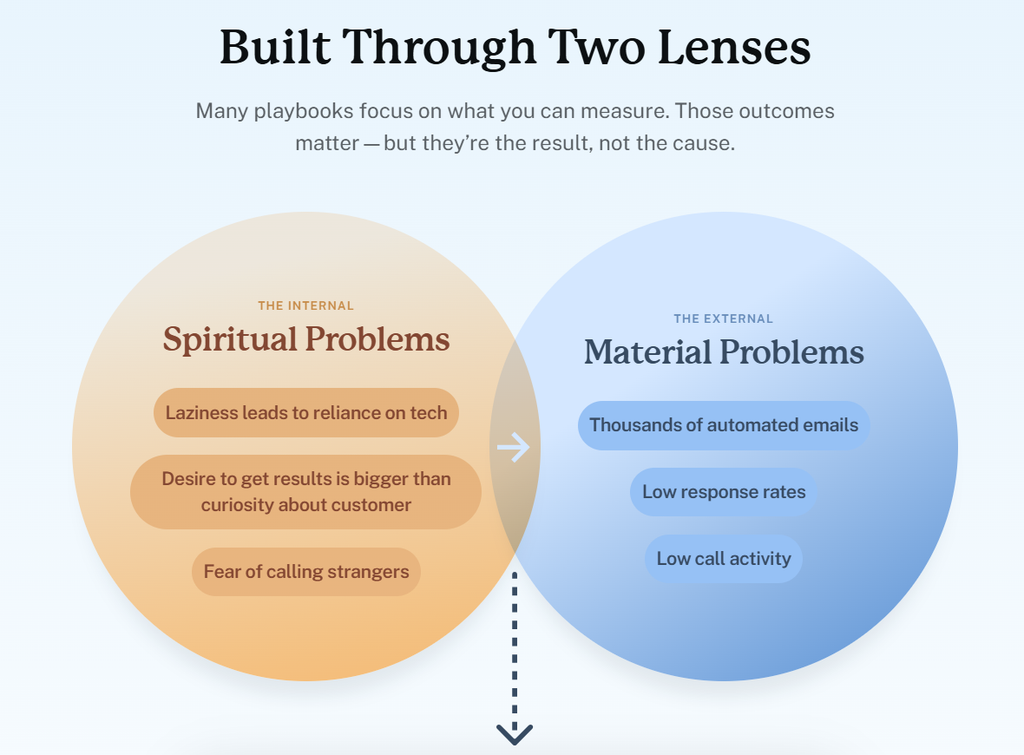
A good commercial real estate sales playbook should give brokers practical guidance they can use before, during and after real sales conversations – not simply document a sales process.
Our CRE playbooks cover:
- Ideal customer profiles and personas: Who to target, their priorities and crucially their challenges.
- Triggers and observations: Events such as expansion, hiring, leadership changes or M&A that create a relevant reason to reach out.
- Prospecting messaging: CRE-specific call talk tracks, emails and multi-channel outreach built around those triggers.
- Probing and discovery questions: Questions designed to uncover business challenges rather than jumping immediately into a property requirement.
- Positioning and proof: Connecting a prospect’s challenge to a relevant value customer story with the initial pain, the solutions and results achieved after.
- Qualification and stakeholder mapping: Understanding whether an opportunity is worth pursuing and who else needs to be involved.
- Objection handling: Questions that uncover the real concern behind objections before attempting to overcome them.
The key is making the playbook specific enough to use in a live opportunity and to build it around the firm’s actual clients, personas, services and sales situations, then reinforcing them through training and coaching.
How to Measure Commercial Real Estate Sales Training
The real measure of CRE sales training is whether it changes behaviour and, ultimately, commercial performance.
We recommend looking at four levels:
- Activity: Are brokers consistently applying the approach – researching accounts, prospecting across channels, following up and engaging the right stakeholders?
- Behaviour change: Look for stronger messaging, better discovery questions, more business-led conversations and greater consistency in how opportunities are managed.
- Pipeline: Are those behaviours producing more conversations, qualified opportunities and progression through the pipeline?
- Revenue: Over time, assess the impact on new business won, account growth, conversion rates and revenue.
The important part is connecting these measures. Revenue is the outcome, but activity, behaviour and pipeline show whether the new sales approach is becoming embedded – and where managers need to coach.
What Results Can You See From Commercial Real Estate Sales Training?
Here’s what that approach has looked like across five CRE teams:
- JLL USA: Needed to generate more outbound pipeline during a traditionally slower selling period. Cosmic Growth delivered a tailored business development program with practical prospecting strategies, tactics and cadences that led to a dramatic increase in outbound pipeline.
- Cresa Houston: Needed to modernize how brokers approached outbound business development. We developed customized messaging, playbooks and multi-channel prospecting approaches which led to more qualified prospect meetings.
- Stream Realty: Needed to develop specific sales skills without losing the relationship-led nature of CRE. We delivered practical, CRE-specific training built around real selling situations, helping them to increase the number and quality of appointments they generated.
- JLL EMEA: Needed a more consistent approach to modern business development across teams and markets. We delivered CRE-specific sales training focused on practical application, leading to 40 new directors being promoted from within without hiring.
- Cresa Atlanta: Wanted to strengthen business development across both senior and younger brokers. We combined a customized CRE sales playbook with regular training and coaching which led to a growth in revenue of more than 20%.
Across all five, the principle is the same: don’t force a generic sales methodology onto CRE brokers or advisers. Start with how that specific team wins business, identify where it breaks down, and build the training around those gaps.
How to Build a Commercial Real Estate Sales Training Program

The best CRE sales training programs start by understanding how the team sells today, then build around the gaps rather than imposing a generic methodology.
- Analyze the current sales process: Understand how brokers currently generate and progress business. What’s working? What isn’t? What results are they seeing? Where are opportunities breaking down? Look across prospecting, messaging, meetings, pipeline progression, account growth and management.
- Identify the priority gaps: Use that analysis to determine which behaviours will have the biggest impact – whether that’s targeting, prospecting, discovery, value articulation, stakeholder management or account growth.
- Build a CRE-specific playbook: Turn those findings into practical messaging, triggers, talk tracks, discovery questions, objection handling and prospecting cadences.
- Train around real situations: Use the team’s actual accounts, prospects, objections and live opportunities rather than generic sales exercises.
- Put it into practice: Apply the training immediately through live prospecting, account planning and deal workshops.
- Enable managers to reinforce it: Give managers frameworks for coaching the new behaviours through one-to-ones, pipeline reviews and deal coaching.
- Measure, learn and refine: Track changes in activity, behaviour, pipeline and revenue, then continually improve the approach based on what’s actually working.
When External Commercial Real Estate Sales Training Makes Sense
Not every CRE team needs an external sales training partner. Firms with strong internal sales leadership, established playbooks and consistent coaching may be able to develop their teams effectively in-house.
External support tends to make more sense when a firm needs to:
- Modernize an established sales approach that has become overly reliant on relationships, referrals or traditional prospecting.
- Create consistency across brokers, offices or regions without removing individual selling styles.
- Build a sales playbook from the ground up based on what actually works within the business.
- Change behaviours, not just deliver training, with coaching and reinforcement after the initial sessions.
- Bring an outside perspective to identify where prospecting, conversations or pipeline progression are breaking down.
Cosmic Growth works specifically with CRE teams to analyze their existing approach, build customized playbooks and training around the gaps, and then reinforce those behaviours through practical coaching and live application.
Key Takeaways
Commercial real estate sales training helps brokers and advisers turn market expertise and relationships into a more consistent business development system.
The strongest programs start by identifying where the current sales process is breaking down, then combine CRE-specific playbooks, practical training, live application and manager coaching to improve prospecting, client conversations, pipeline and ultimately revenue.
- CRE sales training should be specific to how brokers actually sell: It should address real challenges across prospecting, discovery, stakeholder management, account growth and opportunity progression – not apply a generic sales methodology.
- Start with the gaps, not the training: Analyze what the team does today, what’s working, where opportunities are being lost and the results being generated before deciding what skills, playbooks or coaching are needed.
- Measure commercial change, not just learning: Look for changes across activity, sales behaviours, pipeline creation and progression, and ultimately new business, account growth and revenue.